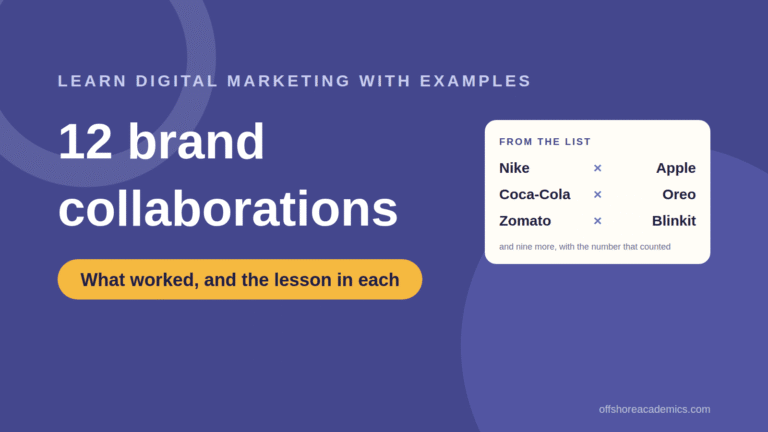
Learn Digital Marketing with 12 Brand Collaboration Examples (2026 Lessons)
12 brand collaboration examples, from Nike × Apple to Zomato × Blinkit, with the lesson in each: types, patterns, how to measure...
Read the article.webp)
Takes 20 seconds. The PDF lands on WhatsApp and email.
No spam. A counsellor may call once to help you pick a batch.
Takes 20 seconds. No obligation.
We never share your number.
Takes 20 seconds.
We never share your number.
Why brand recognition is important, with the numbers: five reasons it pays, what brand asset management is, the eight-asset kit, how it builds recognition on every channel, and a 30-day plan.
Brand recognition is important because it is the cheapest advantage a business can own. A brand people recognise gets clicked more often in search results, chosen more often from a feed or a shelf, trusted faster at the first enquiry, and charged for at a higher price. Widely cited research puts the number of exposures needed before a customer remembers a brand at 5 to 7, and finds that 68% of organisations credit brand consistency with at least 10% of their revenue growth. Brand asset management is the unglamorous system that makes those exposures consistent enough to count.
This guide explains what brand recognition is and how it differs from awareness, why it matters with the numbers behind it, what brand asset management means in practice, how it builds recognition across social, search, content, paid ads and email, a 30-day plan for a small business, and the mistakes that undo the work. It is written for the learners on our digital marketing course in Mohali and for the small business owners who ask us why their competitor gets picked. If you want the wider skill set first, start with how to start digital marketing for beginners.
Brand awareness means a person has heard of you. Brand recognition means they know you when they see you: the logo in a feed, the colour on a shelf, the name in a search result. Brand recall means they think of you unprompted when the need arises, and preference means they choose you over the alternatives. The rungs build on each other, and recognition is the first one that changes behaviour. A person who recognises a brand clicks it ahead of an unfamiliar one and trusts it faster, before they have consciously decided anything.
Three numbers explain most of the subject. The Capital One Shopping review of branding research cites the Association for Psychological Science on first impressions forming in a tenth of a second and consumers needing five to seven exposures before they remember a brand; a Marq survey in which 68% of organisations said brand consistency contributed at least 10% to revenue growth; and Adobe research finding that 34% of consumers notice a logo before anything else. Put together: recognition is built by repetition, repetition only works when every exposure looks the same, and the logo carries more of that load than anything else you own.
You do not need a research budget. Search Console shows how many people searched for your name this month against last; Analytics shows how many came directly. A ten-person test, showing the logo with the name removed and asking who it belongs to, gives aided recognition. Asking ten people to name a business in your category gives unaided recall. Google Trends gives share of search against competitors. Track the first two monthly and the recognition test quarterly, and you will see the effect of consistent branding within a couple of quarters.
On a search results page, the name people recognise gets the click, which raises click-through rate without raising the bid, and both Google and Meta reward higher engagement with lower costs. Branded searches convert at several times the rate of generic ones because the person has already decided. The practical effect is that a recognised business pays less for the same customer, month after month. Our guide to competitive analysis in digital marketing shows how to compare your branded search volume against competitors to see where you stand.
Familiarity is the first step to trust, and trust is what allows a price. The same research review reports that 88% of consumers say they only buy from brands they trust and 82% will pay more for a trusted name. These figures are quoted everywhere and should be read as direction rather than precision, but the direction is consistent: businesses that are recognised negotiate less on price. A coaching institute that people recognise fills batches at full fee; the unknown one runs discounts.
Because it takes several exposures to be remembered, the exposures have to be recognisably the same brand or the count restarts. A business whose Instagram, Google ads and email all use different colours, fonts and tone is paying for seven campaigns and getting credit for one. Consistent assets mean every Reel, ad, brochure and signature counts towards the same seven, which is why the Marq survey links consistency directly to revenue.
The Indian brands everyone quotes are the ones recognised before they are read. Amul’s topical hoardings have kept the same girl, typeface and tone for decades, so the format is recognised from across a road. Fevicol is asked for by name in shops that stock three adhesives. The Zomato and Blinkit billboard exchange, which we break down in our brand collaboration examples, only worked because both brands were recognised on sight. At the moment of choice, the recognised name is the default, and the default wins most of the time.
Two threats make recognition more valuable in 2026 than it was five years ago. AI Overviews and chat assistants now answer many queries directly and name brands when they do; a recognised brand gets cited and chosen, an unknown one gets summarised away. And anyone can copy a course outline, a service list or a price. What they cannot copy is a name that people already type into Google. Branded search is the one traffic source that survives every algorithm change.
Brand asset management is the process of organising, governing, maintaining and sharing the files and guidance that represent a brand, a definition we borrow from Lingo’s guide. It covers three kinds of asset: brand assets that identify you, such as the logo, colours, type and voice; creative assets that teams produce, such as campaign designs and editable files; and marketing assets used in the field, such as ads, product sheets and presentations. The point of managing them is that everyone, including the freelancer hired last week, uses the approved version without asking.
A small business does not need a digital asset management platform. It needs one shared folder with eight things in it: logo files in every format and colour, the palette with hex codes written down, the two typefaces and their sizes, five lines on voice, a photography style with one editing preset, templates for the recurring formats, the boilerplate text everyone copies, and a do-not list. Put it on Google Drive, name it clearly, and give everyone who makes anything the link.
Forty-page brand books get skipped. One page gets read. Put the logo rules in the top third, the palette and type in the middle, and the voice with a good example, a bad example and the do-not list at the bottom. Export it as a PDF into the same folder and send it to every new hire and freelancer on day one. Update it when something changes, and change the date in the corner so people know which version is current.
Name files so the right one is found first: brand-logo-primary-dark.svg beats logo_final_v3_NEW.png. Half of brand inconsistency is people using the wrong file because it was the one they could find.
On social, recognition is built by the profile image, the templates and the photos. Use the same icon on every platform, three post templates in the palette, captions written in the voice from the one-pager, and real photos of your people with one editing preset. Avoid a new look for every campaign, stock photos of strangers, and font drift. Our guide to marketing on Instagram covers the posting side in detail.
In search, the brand name is the asset. Use the same form of the name in the site title, meta titles and Google Business Profile, the same logo on Maps as on the site, and the same boilerplate in the about page and the organisation schema. Inconsistent spellings split your branded search into several queries and confuse both Google and AI assistants about who you are. Branded impressions in Search Console are the number to watch.
Content carries voice and visual style further than any other channel. Set a house style for headings, numbers and sources, one figure style in brand colours with the domain on each image, and named authors with consistent photos. The articles on this blog follow one template for exactly that reason; the salary guide and this page share every visual rule. Return visitors and time on page tell you whether it is working.
Paid ads are where inconsistency costs cash. Keep the logo in the same corner, the palette and type from the kit, and one line of the voice in every headline; change the offer, not the sound. Make the landing page match the ad. Novelty-chasing creative that changes style every fortnight resets the recognition count and pays for it in click-through. Our guide to making marketing videos without a professional includes the branded intro and end card that keep video ads consistent.
Email and WhatsApp are the highest-frequency exposures most businesses have, which makes them the cheapest place to build recognition. One header template, one signature block for the whole team, a sender name that never changes, and the same voice and sign-off. Personal Gmail with no signature and a new header every month throw the frequency away. Our guide to email newsletters covers the cadence.
Week one is an audit: screenshot every place the brand appears and list every logo version and colour in use; most small businesses find six logos and eleven colours. Week two builds the kit and the one-pager and retires every old file. Week three replaces every touchpoint from the kit: profile images, templates, signatures, ad creative, the site header. Week four records the baseline numbers so the next quarter can be compared. No agency is needed for any of it.
Give each touchpoint an owner. The reason brands drift is not that nobody cares; it is that nobody was named. A checklist with owners and a quarterly ten-minute review keeps a small business consistent for years.
Expect nothing in the first two months, movement in branded search and ad click-through from month three, and a measurable change in the recognition test between months six and twelve. Recognition is slow to build and equally slow to lose, which is why it is worth owning. For a marketer, being the person who runs this system is a recognised role; brand and partnerships managers appear in the skills that raise salary list for a reason.
The first mistake is redesigning the identity because the team is bored of it. The customers are not bored; they have only just learned it. Refresh the execution as often as you like, the photos, the campaigns, the offers, and keep the logo, palette and name stable for a decade. Large brands change logos rarely and slightly for this reason.
Do not let a freelancer or a new tool introduce a new colour or font “just for this campaign”. One exception becomes the new normal within three months.
The second mistake is managing the visuals and ignoring the voice. A business that is formal on its website, jokey on Instagram and pushy on WhatsApp presents three brands to the same customer. Five lines of guidance and a good-and-bad example on the one-pager fix most of it. The test is to read a post aloud with the logo covered and ask whether a customer could tell it was you.
The third mistake is not measuring, which means the brand work is the first thing cut when a budget tightens. Branded search impressions and direct traffic are free, available monthly, and persuasive when shown next to cost per lead over a year. Report them together and the link between recognition and cheaper customers becomes visible to whoever holds the budget.
Brand recognition is important because a recognised brand is clicked more, trusted faster, chosen at the moment of decision, charged for at a higher price, and protected against copies and AI-generated answers. It is built by repetition, and repetition only counts when every exposure looks and sounds like the same brand. Brand asset management is the system that makes that possible: eight assets in one folder, a one-page guideline, an owner for every touchpoint, and two free numbers measured monthly. Thirty days sets it up; six months shows it in the numbers.
If you want to learn to run this for a business, with a live project, the digital marketing course at Offshore Academics in Mohali covers brand, content and paid media together, and the design courses cover the Photoshop and Canva skills that produce the kit.
Because a recognised brand is cheaper to sell. It gets clicked ahead of unfamiliar names on the same search results page, which lowers cost per click; it is trusted faster, which lets it charge a higher price (research reviews report 82% of consumers will pay more for a trusted brand); every campaign adds to the same memory instead of restarting it; it is the default at the moment of choice; and branded search survives algorithm changes and AI-generated answers that summarise unknown brands away.
Brand awareness means a person has heard of the brand. Brand recognition means they can identify it on sight from the logo, colours, name or packaging without being told. Brand recall goes one step further: they think of the brand unprompted when the need arises. Recognition is the first rung that changes behaviour, because people click and pick what they recognise before they consciously decide.
Brand asset management is the process of organising, governing, maintaining and sharing the files and guidance that represent a brand. It covers brand assets (logo, colours, typography, photography style, voice), creative assets (campaign designs, videos, editable source files) and marketing assets (ads, product sheets, presentations, templates). For a small business it is a shared folder with eight core assets and a one-page guideline, with a named owner for every place the brand appears.
With five measures, most of them free. Branded search impressions in Google Search Console, month on month. Direct and branded traffic in Analytics. An aided recognition test: show ten customers the logo with the name removed and count who identifies it. An unaided recall test: ask ten people to name a business in your category. And share of search in Google Trends, your branded searches against competitors’. Track the first two monthly and the tests quarterly.
Expect no visible change for the first two months while files and habits are replaced, movement in branded search and ad click-through from month three, and a measurable change in a recognition test between months six and twelve. Widely cited research puts the number of exposures needed to remember a brand at five to seven, so the speed depends on how often and how consistently a customer sees you.
Eight things in one shared folder: logo files in primary, mono and icon versions as SVG and PNG on light and dark; the colour palette with hex codes; two typefaces with web sizes; five lines of voice guidance; a photography style with one editing preset; templates for posts, stories, ads, email headers and proposal covers; boilerplate text including a two-line description and tagline; and a do-not list. Plus a one-page guideline that summarises all of it.
12 brand collaboration examples, from Nike × Apple to Zomato × Blinkit, with the lesson in each: types, patterns, how to measure...
Read the article
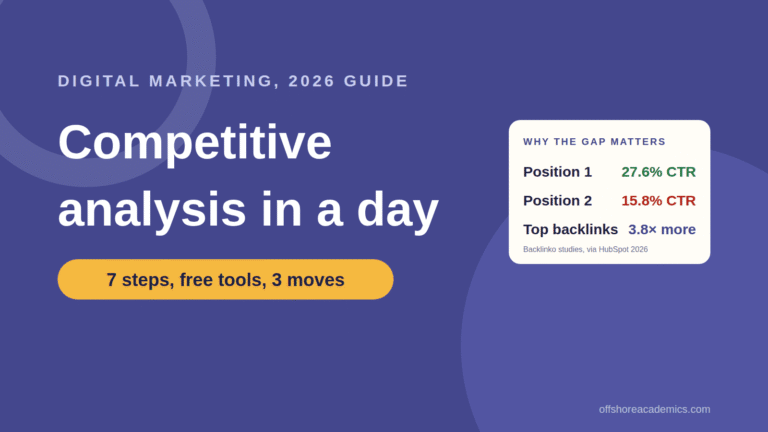
How to do a competitive analysis in digital marketing in one day: seven steps, free and paid tools with 2026 prices, a...
Read the article
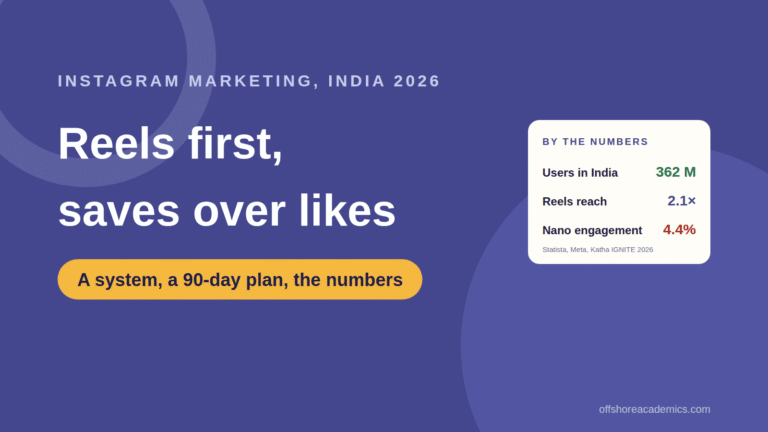
Instagram marketing in India, 2026: the numbers, how the algorithm ranks, a posting system a small team can sustain, a 90-day plan,...
Read the article