How to Do a Competitive Analysis in Digital Marketing (7 Steps, 2026)
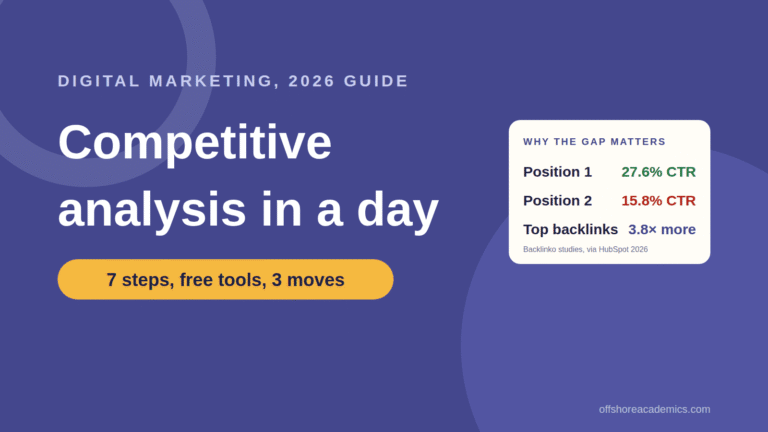
How to do a competitive analysis in digital marketing in one day: seven steps, free and paid tools with 2026 prices, a...
Read the article.webp)
Takes 20 seconds. The PDF lands on WhatsApp and email.
No spam. A counsellor may call once to help you pick a batch.
Takes 20 seconds. No obligation.
We never share your number.
Takes 20 seconds.
We never share your number.
12 brand collaboration examples, from Nike × Apple to Zomato × Blinkit, with the lesson in each: types, patterns, how to measure them, and a teardown exercise for learners.
The fastest way to learn digital marketing is to take a campaign that worked, pull it apart, and write down why. Brand collaboration examples are the best material for that exercise, because two companies had to agree on the audience, the channel, the product and the number that would count as success before anything shipped. Every decision is visible. This article walks through 12 brand collaboration examples, from Nike and Apple to Zomato and Blinkit, and turns each one into a lesson you can use on a real account.
It is written for people learning the subject, whether on our digital marketing course in Mohali or on their own, and for small business owners who want to run a collaboration without a big budget. It covers what a brand collaboration is and the six types you will meet, the twelve examples with the lesson in each, the three patterns they share, how the results are measured, a teardown exercise you can do this week, and the mistakes that sink most partnerships. If you are new to the field, start with how to start digital marketing for beginners and come back.
A brand collaboration is an agreement between two or more brands to make, promote or sell something together so that each reaches the other’s audience. In digital marketing the word covers a wide range: a product built into another product, a new item both names own, a content partnership where one brand films what the other makes possible, a dated limited-edition drop, a licence to borrow a fan base, and plain cross promotion where two brands trade audiences, often with a joke. Influencer deals are a cousin of this, and we cover them separately in the examples where a person rather than a company is the partner.
The six types matter because each one is measured differently and fails differently. A product integration lives or dies on whether people use the feature. A limited edition drop is judged on whether it sold out and how much of the internet noticed. Cross promotion is judged on new followers and app installs. Knowing which type you are looking at tells you which number to look for.
Agencies and in-house teams interview on case studies because a case study shows decisions, not just outcomes. Collaborations are the richest ones. The two audiences had to be described precisely before a partnership could be signed. The budget was shared, so the return had to be visible to both finance teams. And the mechanism is the same one that powers influencer marketing, affiliate deals and co-marketing with agencies: one brand borrows trust the other has already earned. If you can explain why Starbucks and Spotify fit, you can explain why a creator fits a product, which is a skill that moves salary faster than most certificates.
Read each example with the same five questions. Who are the two audiences and where do they overlap? What did each brand bring that the other lacked? Which channel led, and which followed? What made it urgent, a date, a drop or a season? And what number would you use to call it a success? The examples below are written in that order so the pattern becomes automatic.
Nike and Apple have collaborated for two decades. Nike+iPod, launched in 2006, put a sensor in a running shoe and its data on an iPod. In 2016 Apple Watch Nike put Nike’s running app and bands on Apple’s watch, and the line still exists. The audience is the same person on both sides: someone who runs and owns Apple devices. Nike brought running credibility and a community, Apple brought the hardware and its distribution.
The lesson is that when the collaboration is the product, the marketing is mostly explanation. Nobody had to be persuaded that a shoe talking to a watch was interesting; they had to be told it existed. For a learner, notice that the measure of success was usage of the feature and sales of the co-branded models, not impressions.
In October 2012 Felix Baumgartner jumped from a balloon 39 kilometres up wearing GoPro cameras, and Red Bull streamed it live on YouTube to a record of around 8 million concurrent viewers. Red Bull produces extreme moments; GoPro makes them watchable. The two signed a formal global partnership in 2016 covering events, content and even an equity stake. Neither company sells the other’s product, and neither needs to; they sell the same feeling to the same young, active audience.
The lesson for content marketing is that a single unrepeatable event, properly filmed, is worth years of ordinary posts. The Stratos footage is still used. If you want to learn the production side of this, our guide to {A(OA+”/how-to-make-videos-without-hiring-a-professional/”,”making marketing videos without hiring a professional”)} starts at the level a small business can afford, and the {A(OA+”/youtube-marketing-certification-course/”,”YouTube marketing course”)} covers the channel where this footage lives.
In 2015 Starbucks and Spotify connected their apps. Starbucks staff curated the music in stores through Spotify, and Starbucks Rewards members could see what was playing and save it. Spotify reached millions of loyalty members with a premium offer; Starbucks gave its app a use beyond paying for coffee. The audience overlap is a single commuter with two habits, coffee on the way to work and music while getting there.
The lesson is about app ecosystems. A collaboration that adds a feature to an app people already open is cheaper than acquiring a new user, and it raises daily active use on both sides. Learners building a loyalty or email programme should ask what partner feature would give members a reason to come back that has nothing to do with buying, a point we make in our {A(OA+”/marketers-guide-to-creating-email-newsletters/”,”guide to email newsletters”)}.
Adidas and the environmental group Parley for the Oceans announced their partnership in 2015 and shipped the first shoe made with recovered coastal plastic in 2016. The range became permanent and has run into tens of millions of pairs. Parley brought a mission and the material, Adidas brought design, manufacturing and distribution. The audience overlap is the buyer who wants performance kit and wants to feel decent about it.
The lesson is that purpose marketing only works when the product itself is the proof. Adidas did not run ads about caring for the oceans; it sold a shoe that was visibly made from ocean plastic. For a learner, this is the difference between a value stated and a value shown, and it is the test to apply to any cause-led brief you are handed.
In March 2012 Taco Bell launched Doritos Locos Tacos, a taco with a shell made of Doritos, and sold around 100 million of them in the first ten weeks. It is the cleanest example of a co-created product: one item, two names, and each brand’s fans given a reason to try the other. Most of the launch noise was earned, driven by social media and queues, rather than bought.
The lesson is that a new product is a better story than a new ad. When two brands make something that did not exist before, the news writes itself and the sales number is unambiguous. It is also the hardest type to copy, because it needs both product teams, not just both marketing teams.
In September 2024 Coca-Cola and Oreo launched “Bestie Mode”: a Coca-Cola flavoured Oreo and an Oreo flavoured Coca-Cola Zero Sugar, on shelves for a limited period across many markets, with a Spotify playlist feature and Forever 21 merchandise around it. Two of the most recognised brands in the world had never been paired, and the surprise was the point.
The lesson is the anatomy of a drop: an unexpected pairing, a product people can actually buy, a date after which it is gone, and two or three extra channels that let people talk about it without buying. Learners should notice that the shelf led and social amplified, not the other way round.
In May 2021 McDonald’s sold the BTS Meal, the band’s favourite order with two new sauces and purple packaging, in close to 50 markets. Fans bought it, photographed it, kept the packaging and posted, and in several cities the ordering apps struggled. McDonald’s brought reach and stores; BTS brought a fan base that organises itself.
The lesson for anyone studying influencer marketing is that the size of a following matters less than whether it acts. A fandom that will queue is worth more than an audience that will scroll. The same principle applies to a micro-creator in Chandigarh with 20,000 loyal followers.
For the 2023 film, Mattel and Warner Bros. signed more than 100 brand partnerships, from an Airbnb listing of a life-sized Malibu DreamHouse to clothing, food, beauty and homeware. Everything shared one colour. For a month pink was unavoidable, and each partner’s campaign advertised every other partner’s. The film became the highest-grossing release of 2023 at over $1.4 billion.
The lesson is the power of a shared visual code. When every partner uses the same colour, sound or phrase, the campaigns compound instead of competing. It also shows that licensing is a marketing channel, not just a revenue line. Our article on {A(OA+”/brand-recognition-is-important/”,”why brand recognition matters”)} covers the asset side of this.
In 2017 Louis Vuitton and Supreme released a collection that put Supreme’s red box logo on Louis Vuitton trunks, bags and clothing, sold through a handful of pop-ups that sold out within hours. Louis Vuitton reached a younger streetwear buyer; Supreme gained luxury credibility; both gained a resale market that kept the collaboration in the news for years. The twist is that Louis Vuitton had sent Supreme a cease-and-desist letter in 2000.
The lesson is that distance between the two brands creates the story, provided the audiences still overlap. H&M and Balmain used the same logic in 2015 at a lower price point. Learners should note that scarcity here was real, not staged, and that the resale market became an unpaid media channel.
In January 2023 Blinkit and Zomato, both owned by the same parent, put two billboards side by side in Gurugram. Blinkit’s read “Doodh mangoge, doodh denge”; Zomato’s replied “Kheer mangoge, kheer denge”, a rework of a Bollywood line. Photos spread across Indian social media within a day, as Business Today reported, and brands from KitKat to Punjab National Bank and Jeevansathi posted their own versions, which extended the campaign for free.
The lesson for Indian marketers is that a cheap, physical channel can be the seed of a social campaign if the creative is something people want to repeat. The two apps shared a phone and a user base; the joke gave each brand’s users a reason to notice the other. It is the most copyable example on this list, and the one we most often use in class.
boAt, India’s biggest audio brand by volume, launched limited edition headphones and earbuds in Masaba Gupta’s prints at Lakmé Fashion Week in 2020 and extended the partnership the following season. boAt gained a fashion audience and a reason to charge more; the designer reached a mass electronics buyer she would not otherwise meet. The launch stage was fashion week, and the sales channel was boAt’s site and the marketplaces it already sold on.
The lesson is that a design collaboration lets a value brand move up-market for a season without changing what it makes. For learners, this is the Indian version of the Apple × Hermès watch bands, at a price point most of the country can afford, which is why it sold rather than just being admired.
In 2024 Duolingo and Crocs released green clogs and owl charms, sold through a pop-up and online. Duolingo’s owl had already become a character on TikTok and Instagram with a following of its own; Crocs had spent years turning its clog into a canvas for partners. The product was the joke made physical, and both brands share a self-aware tone that made the pairing feel inevitable rather than forced.
The lesson is that a brand character built on social media is an asset that can carry products, not just posts. It is also a reminder that tone is a targeting tool: two brands with the same voice can share an audience even when their products have nothing in common. If you are learning to run brand social accounts, our {A(OA+”/marketing-on-instagram/”,”guide to marketing on Instagram”)} covers how that voice is built.
Every example above passes the same test: the two brands share people but not products. Starbucks and Spotify share a commuter. Zomato and Blinkit share a phone. Nike and Apple share a runner. Two coffee chains share people and products, so a partnership between them would split the market rather than grow it. When you evaluate a partner, draw the two circles and be honest about whether the overlap is the audience or the shelf.
None of these campaigns was “everywhere”. Each had one lead channel, the product, a video, an app, a shelf, a billboard, and used the others to send people to it. That is the discipline learners most often miss when they plan a campaign: they list eight channels and give none of them a job. If you cannot name the lead channel in one word, the plan is not finished. The same rule runs through our guide to competitive analysis in digital marketing, where the first thing to find out about a rival is where they actually win.
Nine of the twelve examples were dated: a drop, a limited run, a season, a film release. A date turns interest into action, gives creators and press a reason to post now, and lets you measure a clean before-and-after. The three that were not dated, Nike × Apple, Adidas × Parley and Starbucks × Spotify, were product integrations designed to last, and even those launched with an event. If your collaboration has no date, ask what would happen if it did.
Judge a collaboration on five numbers. Reach, counted as new people rather than total impressions. Engagement rate, with saves and shares weighted above likes. Earned media, the posts and press you did not pay for, which is where Zomato × Blinkit and Coca-Cola × Oreo won. Incremental sales lift, meaning sales above what the same weeks would have done anyway. And cost per new customer, compared with what you normally pay on Meta or Google.
A campaign that wins on reach and loses on cost per customer is a vanity project, and a lot of collaborations are. Learning to run this sheet is one of the skills that raise a marketer’s pay fastest.
You do not need a dashboard for this. A sheet with five rows and three periods, four weeks before, the campaign weeks and four weeks after, will tell you whether a collaboration worked and whether to repeat it. The after column is the one most reports skip, and it is where the honest answer lives: did the new followers stay, and did sales settle above the old baseline?
Agree the success number with the partner before launch and put it in the agreement. Most collaboration disputes are two teams reporting different wins from the same campaign.
Pick any example, from this list or from your feed this week, and give it an hour. Answer the five questions from the top of the article. Find two published numbers, one for reach and one for sales, downloads or sign-ups. Then write one page: what happened, why it worked, and what you would change. Four of these pages are a portfolio, and in our experience a candidate with four teardowns interviews better than one with three certificates and no opinions. Our comparison of digital marketing certificate programmes explains why employers rate this kind of evidence.
Then do the same thing forward. Choose a real business near you, a gym, a café, a coaching centre, and find it a partner that shares its customers but not its product: the gym and a meal-prep kitchen, the café and a bookshop, the coaching centre and a stationery brand. Name what each side brings, pick the lead channel, set a date, and write down the success number. Students on our course pitch these to real Mohali businesses, and a few of them get run, which is the kind of project that shows up on the skills list that raises pay.
Collaborations touch three kinds of role. Brand and partnerships managers plan them, usually after three to five years in the field. Social media and content roles run the amplification from day one, which is where most learners start. Performance marketers own the measurement, and because that is the part most teams get wrong, it is where a junior can stand out early. Our digital marketing course covers all three sides with a live project, and the full course list has the design and video skills that make the creative side possible.
The most common failure is a pairing that shares an audience but not a value. A luxury brand with a discount partner sells away the exclusivity that was its entire product. A brand known for restraint with a partner known for noise confuses both audiences. The test is simple: would a customer of each brand be surprised in a good way, as with Coca-Cola × Oreo or Louis Vuitton × Supreme, or just confused?
Do not sign a collaboration because the partner is bigger than you. If their audience does not overlap with your customers, you are paying to advertise them.
The second failure is a deal where only one side wins. Typically the smaller partner supplies the creative work and gets “exposure”, while the larger one gets free content. Both sides should be able to say in one sentence, with a number, what they gained. If either cannot, it was a sponsorship, and the next one will not happen.
The third failure is not counting, or counting the wrong thing. Impressions hide whether a campaign paid for itself. A lift without a baseline is a guess. The fix is the sheet above: agree the number in advance, measure the four weeks before, and report the four weeks after, not just the launch week when everything looks good.
Brand collaborations are the best case studies for learning digital marketing because every decision is visible. The twelve examples here, from Nike × Apple to Zomato × Blinkit, share three patterns: a shared audience with different products, one lead channel with the rest amplifying, and a date that makes it urgent. Measure them with reach, engagement rate, earned media, incremental sales lift and cost per new customer, against a baseline. Then practise: tear down four campaigns with the five questions, and pitch one for a business near you.
If you want to do that with feedback and a live project, the digital marketing course at Offshore Academics in Mohali is built around exactly that work, and the beginners guide shows what to learn before you join.
A brand collaboration is an agreement between two or more brands to make, promote or sell something together so that each reaches the other’s audience. The six common types are product integration (Nike × Apple), a co-created product (Doritos × Taco Bell), a content partnership (GoPro × Red Bull), a limited edition drop (Coca-Cola × Oreo), fandom or licensing (McDonald’s × BTS, Barbie), and cross promotion (Zomato × Blinkit). The test of a good partner is a shared audience with a different product.
The twelve covered in this article: Nike × Apple, GoPro × Red Bull, Starbucks × Spotify, Adidas × Parley, Doritos × Taco Bell, Coca-Cola × Oreo, McDonald’s × BTS, Barbie × more than 100 brands, Louis Vuitton × Supreme, Zomato × Blinkit, boAt × Masaba and Duolingo × Crocs.
Together they cover every type of collaboration, and each one has a clear lesson: build it into the product, let one partner supply the moment, connect loyalty programmes, make purpose visible in the product, create a new item, use surprise and a deadline, borrow a fandom that acts, share a visual code, use distance between brands, seed social with a cheap channel, add design to a value brand, and give a mascot something to sell.
Zomato × Blinkit’s 2023 billboard exchange in Gurugram is the most copyable: two cheap hoardings with a Bollywood line reworked, shared across social media within a day and copied by brands from KitKat to Punjab National Bank. boAt × Masaba Gupta’s limited edition headphones, launched at Lakmé Fashion Week in 2020, show how a value brand adds a design partner to move up-market for a season. Both are examples that a small Indian business can adapt with a local partner.
Use five numbers against a baseline from the four weeks before: reach counted as new people, engagement rate with saves and shares weighted above likes, earned media (posts and press you did not pay for), incremental sales lift above what the same weeks would have done anyway, and cost per new customer compared with your usual paid channels. Report the four weeks after the campaign too, because whether new followers and sales stayed is the real result.
Find a partner that shares your customers but not your product: a gym and a meal-prep kitchen, a café and a bookshop, a coaching centre and a stationery brand. Agree what each side brings, pick one lead channel such as a joint offer, a shared post series or a co-hosted event, set a date, and write down the number that will count as success. The Zomato × Blinkit campaign cost two billboards; the scale of the idea mattered more than the spend.
Because a collaboration exposes every decision a marketer makes: who the audience is, what each brand contributes, which channel leads, what creates urgency, and which number counts. Answering those five questions for a campaign is a case study, and answering them for your own brand is a plan. Four written teardowns make a portfolio that performs well in interviews, and pitching a collaboration for a local business is a project many courses, including ours, set as coursework.
How to do a competitive analysis in digital marketing in one day: seven steps, free and paid tools with 2026 prices, a...
Read the article
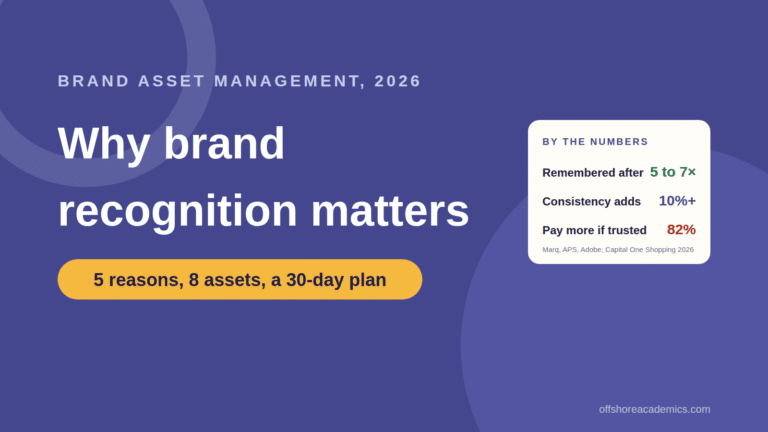
Why brand recognition is important, with the numbers: five reasons it pays, what brand asset management is, the eight-asset kit, how it...
Read the article
Instagram marketing in India, 2026: the numbers, how the algorithm ranks, a posting system a small team can sustain, a 90-day plan,...
Read the article