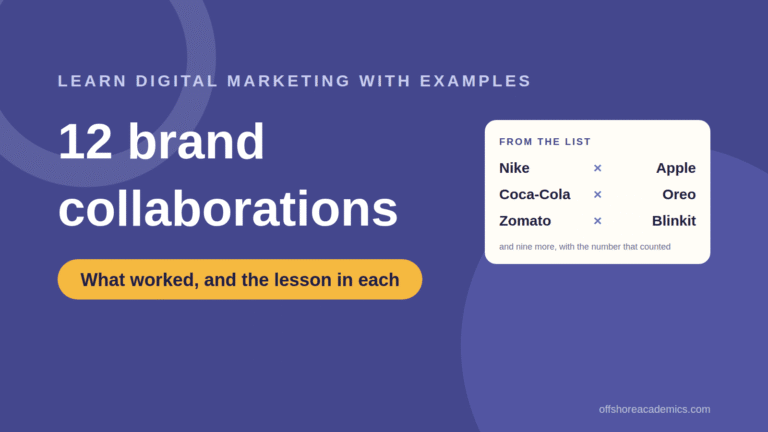
Learn Digital Marketing with 12 Brand Collaboration Examples (2026 Lessons)
12 brand collaboration examples, from Nike × Apple to Zomato × Blinkit, with the lesson in each: types, patterns, how to measure...
Read the article.webp)
Takes 20 seconds. The PDF lands on WhatsApp and email.
No spam. A counsellor may call once to help you pick a batch.
Takes 20 seconds. No obligation.
We never share your number.
Takes 20 seconds.
We never share your number.
How to do a competitive analysis in digital marketing in one day: seven steps, free and paid tools with 2026 prices, a worked example for a local business, and the three moves that come out of it.
A competitive analysis in digital marketing is a structured look at what your competitors do online, where they win, and where they leave gaps you can take. Done properly it takes about one working day with free tools, and it changes the plan more than any other single exercise, because it replaces guesses about keywords, content and ad spend with what is already working in your market.
This guide is the process we teach on the digital marketing course at Offshore Academics and run for agency clients at Offshore Marketers. It covers what competitive analysis is and which competitors to include, a seven-step process with the output of each step, the free and paid tools with 2026 prices, how to turn findings into three moves, a worked example for a local business, and the mistakes that waste the day. If you are new to the subject, our guide on how to start digital marketing covers the basics first.
Competitive analysis in digital marketing is the process of identifying who competes with you online, measuring what they do across search, content, paid media, social and email, and using the gaps to decide your own plan. The mistake most people make at the start is analysing only the companies they think of as rivals. Online there are three kinds. Direct competitors sell the same thing to the same customer.
Search competitors are whoever ranks for the keywords you want, which for a coaching institute might include a news site, a YouTube channel and a Quora thread. Indirect competitors solve the same problem a different way; a free YouTube playlist is an indirect competitor to a paid course. Analyse all your direct competitors, the top five search competitors, and keep an eye on two indirect ones.
The gap between winning and nearly winning online is large. Backlinko’s click studies, summarised in HubSpot’s 2026 competitor analysis guide, put 27.6% of clicks on the first organic result and 15.8% on the second, and find the top result has around 3.8 times more backlinks than the rest of page one. Ahrefs found in February 2026 that pages ranking first see a 58% lower click rate when an AI Overview appears above them, which means the competitor being cited by the AI now matters as much as the one ranking first.
A competitive analysis tells you which of those positions your competitors hold, and what it took to get there, before you spend a rupee trying to take it.
Do it every quarter as a calendar item, and additionally before any launch, whenever rankings, ad costs or lead volume move without an obvious cause, and whenever a new name starts showing up in your ad auctions or search results. A first full analysis takes a day; the quarterly refresh takes two or three hours because the benchmark sheet already exists and you are updating numbers rather than building it.
Start with the keywords that bring you customers, not the ones you wish you ranked for. Search each one in an incognito window and write down who appears on page one. Add the direct competitors your sales or admissions team hears about most. Then cut the list to five. Fifteen shallow profiles look thorough and teach nothing; five deep ones produce the plan.
Build one sheet with your five competitors as rows and you as row one. Five columns are enough: estimated monthly traffic and its channel split, organic keywords ranked, domain authority, social followers with posting cadence, and whether they are running paid ads right now. The numbers from free tools are estimates and can be 30% off, which does not matter; you are looking for who is twice your size and who is half, not for precision.
The keyword gap is the list of terms two or more competitors rank for that you do not. Semrush and Ahrefs have a gap tool; on a free budget, export each competitor’s top keywords from Ubersuggest and compare in a sheet. Sort by volume, then by how close the intent is to a purchase: “digital marketing course fees Mohali” beats “what is digital marketing” even at a tenth of the volume. Take the top twenty and you have next quarter’s content calendar.
Open each competitor’s five best pages, found through the tools or simply by searching the keywords, and note the format, the length, the last update, the images and the call to action. Search your main keywords in Google and in ChatGPT and note which competitor is cited. Then list what none of them have: a fees page with real numbers, a comparison page, a case study with results, a salary guide. Gaps are where you win fastest. Our own salary guide exists because no competitor had one with real data.
Both major ad platforms publish every active ad. The Meta Ad Library shows all live Facebook and Instagram ads for any page with start dates; the Google Ads Transparency Center does the same for Search, YouTube and Display. Screenshot each competitor’s ads, note the offer, the landing page and the run time. An ad that has run for four months is paying for itself; an ad that appeared last week is a test. You now know their offers and their best creative without spending anything.
Count posts per week and the format mix on their two main channels, and work out the engagement rate on the last ten posts. Sign up to their newsletter and, if relevant, enquire as a customer with a spare number, then log what arrives for a month: frequency, subject lines, offers, and how many times they follow up. Most businesses have never seen their competitor’s follow-up sequence, and it is often the real reason the competitor converts better. If you are building your own, our guide to email newsletters covers the cadence.
Run each competitor through a free backlink checker and list their top referring domains. Mark the ones you could realistically earn too: local directories, education listing sites, press that covers your city, partner pages. Then search each brand name and read the reviews, the news and the complaints. Reputation is part of the competitive picture, and it is where a smaller business with better reviews can beat a bigger one.
Keep everything in one spreadsheet with one tab per step. The analysis is only useful if the next person, or you in three months, can update it in an afternoon.
A complete first analysis costs nothing. Search Console tells you where you already stand. The Meta Ad Library and Google Ads Transparency Center show every competitor ad. Similarweb’s free tier gives a traffic estimate and channel split for any site above a few thousand visits a month. Ubersuggest’s free daily searches cover keywords and a domain score. Google Trends shows which terms are rising in your state. The Wayback Machine shows what a competitor’s site said a year ago, which is the cheapest way to see what they have changed and therefore what they think is working.
The paid tools make the same analysis faster and deeper. Semrush at $139.95 a month is the agency standard and has the best keyword gap and backlink gap reports. Ahrefs starts at $29 for a starter plan and $129 for the full toolset, with the best backlink data. SpyFu at $39 shows a competitor’s Google Ads history going back years. Moz Pro at $99 and Ubersuggest at $29 are the budget options. Prices are from the AI Rank Lab 2026 comparison and vendor pages.
If you are learning, note that Semrush appears on more Indian agency job descriptions than any other tool, which is why the skills that raise pay list includes it.
A learner can do the whole thing without paying. Set up Search Console on any site you control so the first-party data is real. Use the free tiers for the benchmarks, both ad libraries for the paid picture, and Google Trends for demand. When you reach the keyword gap step, start a Semrush or Ahrefs free trial and do that step in the trial week. One written analysis of a real local business, with screenshots, is a portfolio piece; our comparison of digital marketing certificate programmes explains why employers rate that above most certificates.
Compress the seven tabs into one page with four boxes. Strengths and weaknesses are about you, measured against the benchmark sheet. Opportunities are gaps nobody is filling, from the content audit and the ad libraries. Threats are moves competitors made in the last quarter. Every line must trace back to a finding; a SWOT written from opinion is the reason most people think SWOT is useless.
Choose three moves. Usually they are the same three: build the page nobody has that your best keywords want, run your own version of the competitor ad format that has been live longest, and fix the one benchmark number where you are furthest behind. Give each an owner, a date and the number it should change. Then rerun the benchmark sheet in ninety days. If you want to see how a well-chosen move plays out at brand scale, our 12 brand collaboration examples show what each company decided to do and which number it moved.
The report is short. Five lines of summary, the benchmark table, the twenty-keyword gap, one page of ad screenshots, one page of content and reputation gaps, and the three moves. A manager reads the first five lines and the last three; everything else is evidence in case they ask.
Take a hypothetical digital marketing institute in Mohali. Searching its five main keywords produces two local institutes, one national online platform, a YouTube channel and a free playlist. The benchmark sheet, filled from free tools, shows the shape of the market at a glance: a national player it will never out-rank on broad terms, a local rival four times its size that posts daily and runs six ads, a smaller rival, and free content that competes for the same beginner.
The keyword gap produced fourteen local terms containing “fees”, “placement” or “Mohali” that both rivals rank for, and not one page in the market gives real numbers. The ad libraries showed Institute A’s longest-running ad offering a free demo class, pointed at a landing page that avoids fees. The mystery enquiry showed Institute A calling within four minutes and sending six WhatsApp follow-ups in ten days, while Institute B replied once by email. None of this cost money, and all of it is specific enough to act on tomorrow.
The three moves follow directly. Publish a fees and placement page with real numbers, which takes the fourteen local keywords and the trust that comes from being the only honest page. Run a free demo class ad like Institute A, but put the fees on the landing page, which turns the competitor’s evasion into your differentiator. Build a ten-day WhatsApp follow-up so your response matches the best in the market. Review at ninety days on local rankings, cost per enquiry and enquiry-to-visit rate.
This is the exercise students on our course do for a real business near them, and it is the kind of live project that moves a fresher’s salary.
The most common mistake is to finish the analysis and copy the biggest competitor. That puts you on their ground with a smaller budget. The analysis exists to find what they do not do, or do badly: the missing fees page, the slow follow-up, the ad that avoids the real question. Copy their formats and channels by all means, because those are proven; never copy their offer or their positioning.
Do not build your keyword list from a national platform’s rankings. They rank for 88,000 terms because of authority you will not have for years. Compare yourself to competitors within about three times your size.
Third-party traffic and keyword numbers are estimates and can be 30% or more off, especially for small sites. Use them to understand scale, who is twice your size and who is half, and never to argue about precision. The only exact numbers on the sheet are your own, from Search Console and your ad accounts, which is one more reason to set those up before you start.
An analysis is a snapshot, and online markets move quarterly. The competitor who stopped advertising may be back; the page cited in the AI Overview changes; a new local rival launches. Put the refresh in the calendar every ninety days. Because the sheet already exists, the refresh takes three hours, and it is where the compounding advantage comes from. The same discipline applies to your own content; when we rebuilt our brand recognition guide, the first step was rerunning this analysis.
A competitive analysis in digital marketing is a day’s work with free tools that replaces guesses with evidence. Pick five competitors across direct, search and indirect. Benchmark five numbers each, find the keyword gap, audit their content, read their ads in the public libraries, map their social and follow-up, and check their backlinks and reputation. Compress it to a one-page SWOT and three moves with owners and dates, and rerun the sheet every quarter.
If you want to learn this on a live business with feedback, the digital marketing course at Offshore Academics in Mohali sets exactly this as a project, and the full course list covers the tools alongside it.
Competitive analysis in digital marketing is the process of identifying who competes with you online, measuring what they do across search, content, paid ads, social media and email, and using the gaps to set your own plan. It covers three kinds of competitor: direct (same product, same market), search (whoever ranks for your keywords, which may include publishers and YouTube channels) and indirect (a different solution to the same problem, such as free content against a paid course).
Seven steps. Pick five competitors from incognito searches of your main keywords plus the rivals your sales team names. Benchmark five numbers per competitor: traffic and channel split, keywords ranked, domain authority, social cadence and live ads. Find the keyword gap, the terms two or more competitors rank for that you do not. Audit their five best pages and check who is cited in AI Overviews. Read their live ads in the Meta Ad Library and Google Ads Transparency Center. Map their social posting and their email or WhatsApp follow-up by enquiring as a customer. Check their backlinks and reviews. Then compress it into a one-page SWOT and three moves.
Free: Google Search Console, the Meta Ad Library, the Google Ads Transparency Center, Similarweb’s free tier, Ubersuggest’s free searches, Google Trends and the Wayback Machine. Paid, at 2026 starting prices: Semrush ($139.95 a month, the agency standard with keyword and backlink gap reports), Ahrefs ($29 starter, $129 full), SpyFu ($39, competitor PPC history), Moz Pro ($99) and SE Ranking ($129). A complete first analysis can be done with the free tools alone.
Every quarter as a fixed calendar item, plus before any launch or new service, whenever rankings, ad costs or lead volume move without an obvious reason, and whenever a new competitor appears in your ad auctions or search results. The first full analysis takes about a day; the quarterly refresh takes two or three hours because the benchmark sheet already exists.
Use the keyword gap report in Semrush or Ahrefs, which lists terms competitors rank for that you do not. On a free budget, export each competitor’s top keywords from Ubersuggest’s free searches and compare them in a spreadsheet. Sort by volume and then by buying intent, so that a term like “course fees Mohali” outranks a broad “what is digital marketing” term. Take the top twenty as your next content list.
Keep it short: a five-line summary naming the competitors, what each does best and your three moves; the benchmark sheet with you on row one; the twenty-keyword gap with the page you will build for each; one page of screenshots of each competitor’s longest-running ad with its offer and landing page; one page of content and reputation gaps; and the three moves, each with an owner, a date and the number it should change.
12 brand collaboration examples, from Nike × Apple to Zomato × Blinkit, with the lesson in each: types, patterns, how to measure...
Read the article
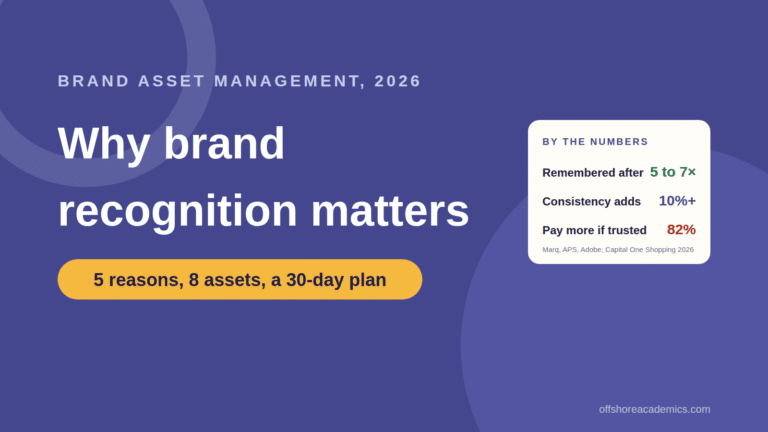
Why brand recognition is important, with the numbers: five reasons it pays, what brand asset management is, the eight-asset kit, how it...
Read the article
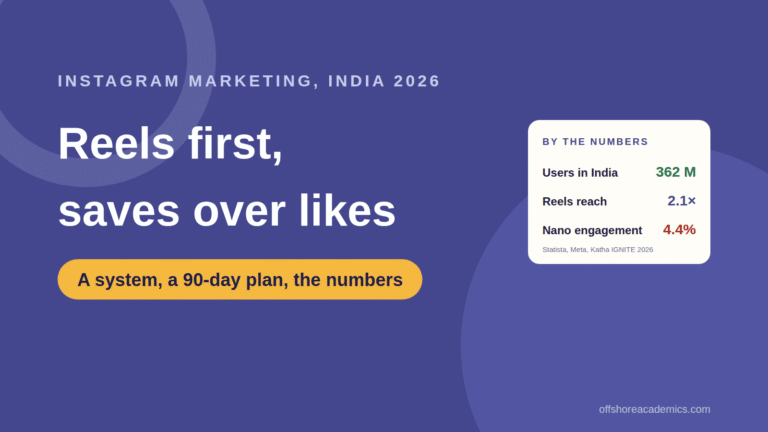
Instagram marketing in India, 2026: the numbers, how the algorithm ranks, a posting system a small team can sustain, a 90-day plan,...
Read the article